
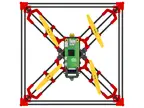
CogniFly — Foldable Collision-Resilient Nano Drone
 B
B✓ Links verified Oct 9, 2026
Sign up to InstallAbout this program
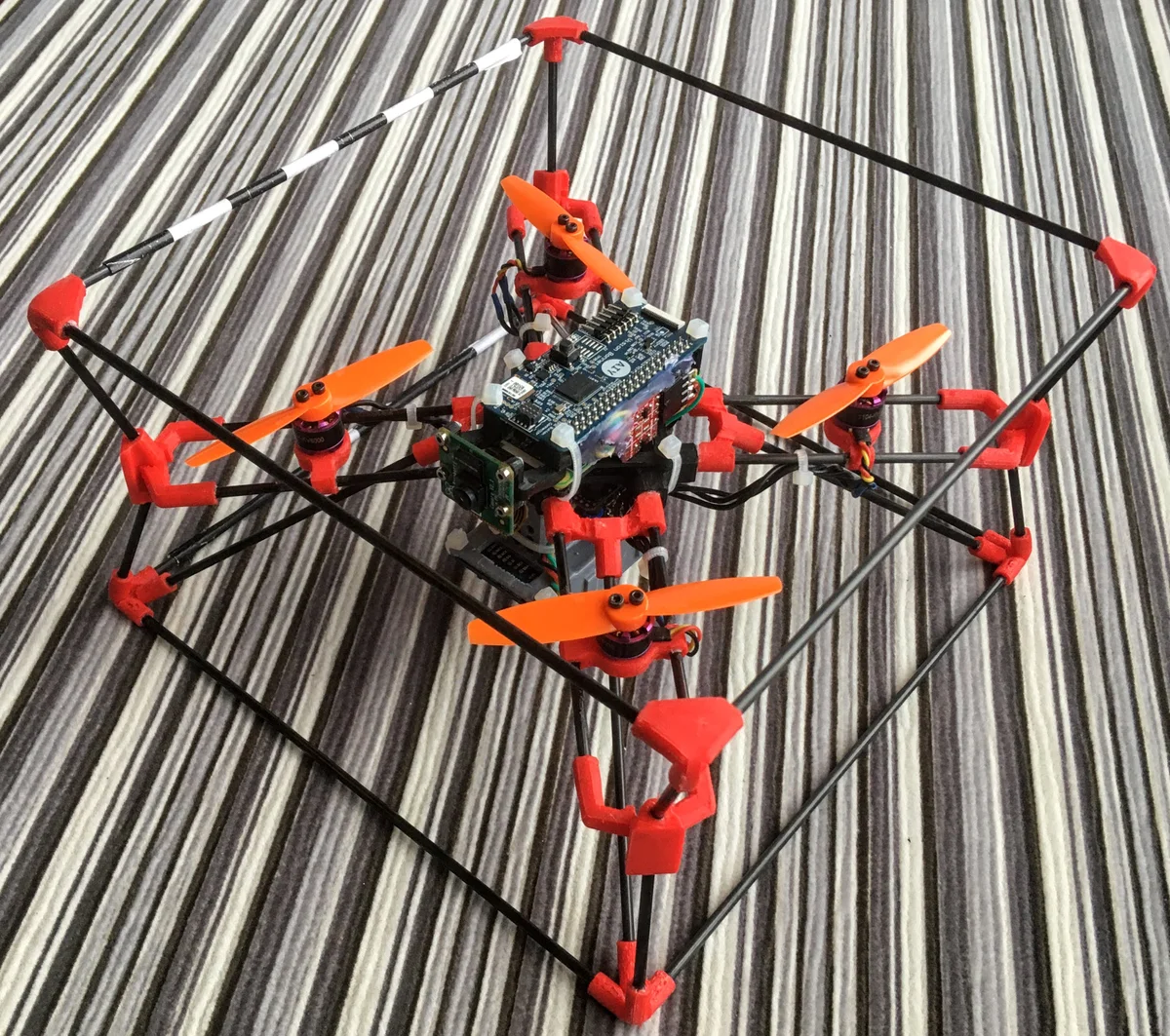
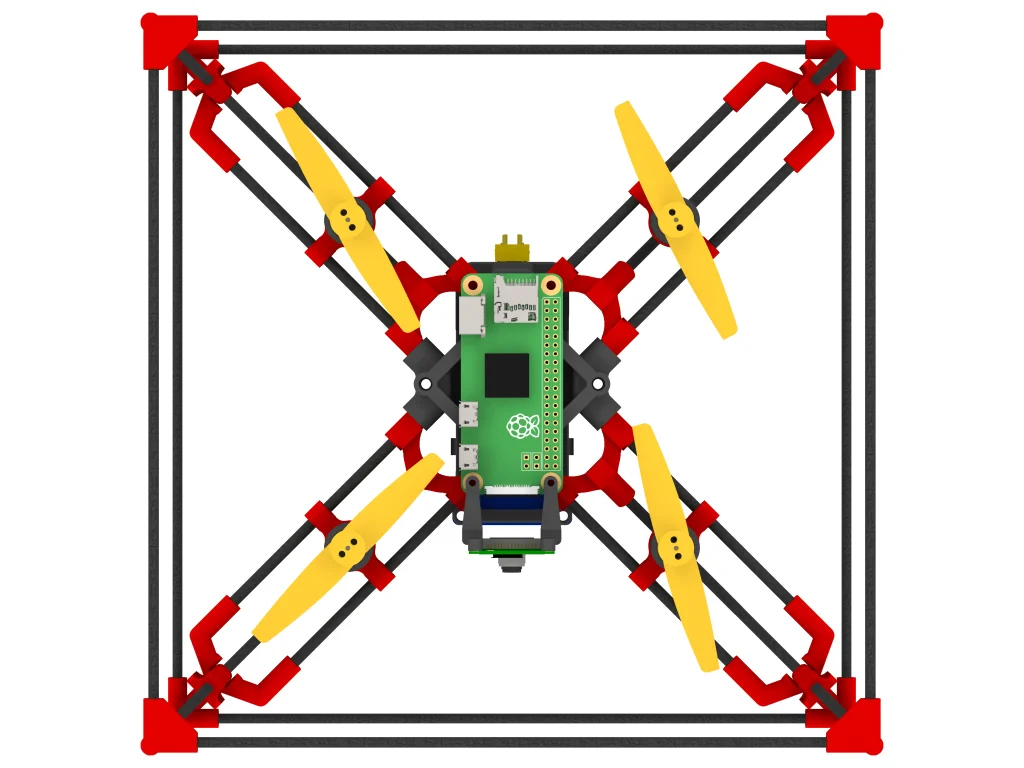
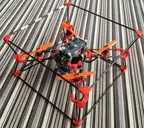
CogniFly is an open-source, foldable, collision-resilient nano/micro quadcopter UAV with a soft exoskeleton inspired by insect morphology. The frame is assembled from 3D-printed flexible TPU parts and rigid PLA parts, connected by carbon fiber or bamboo strut rods that act as energy-absorbing springs on impact. At under 250g, it carries a Raspberry Pi Zero W for autonomous flight, a flight controller running INav/BetaFlight, and supports optical flow, lidar altitude hold, and camera-based computer vision. The collision-resilient design allows the frame to flex and absorb crash energy, making it ideal for research in cluttered or GPS-denied environments.
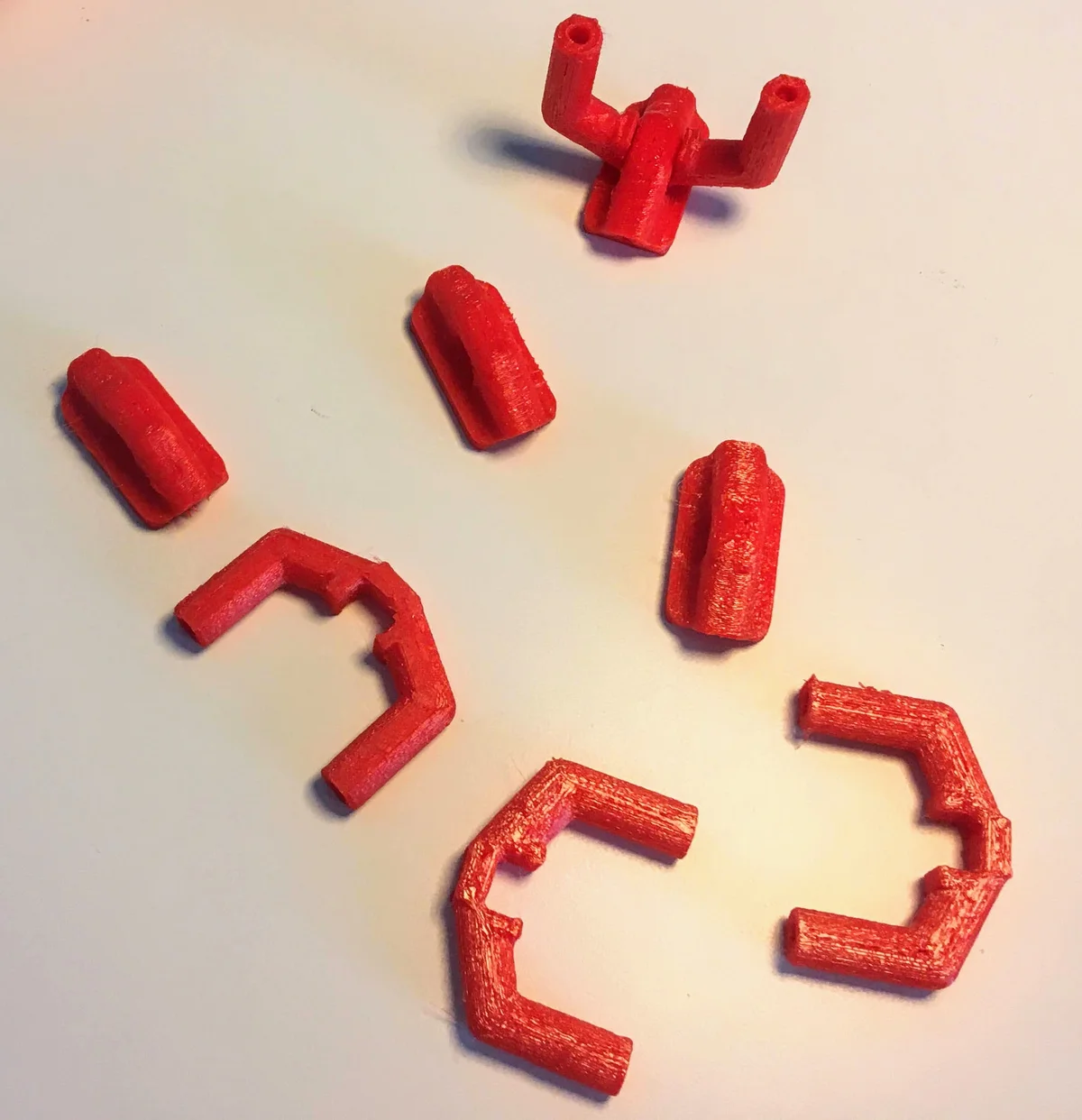
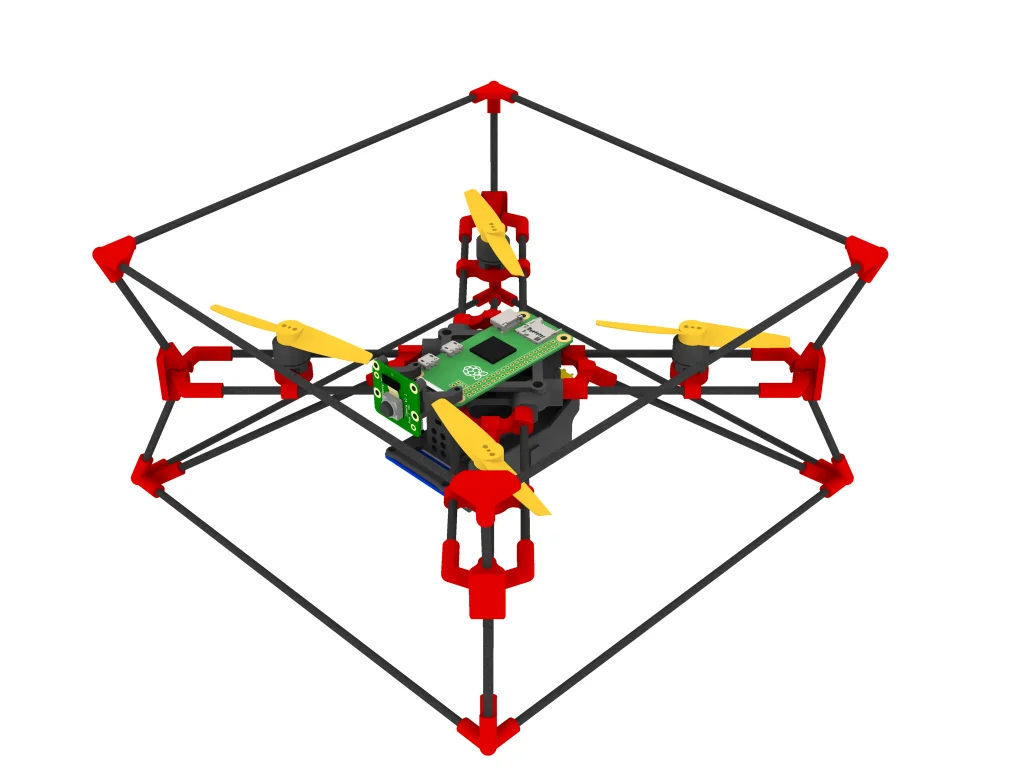
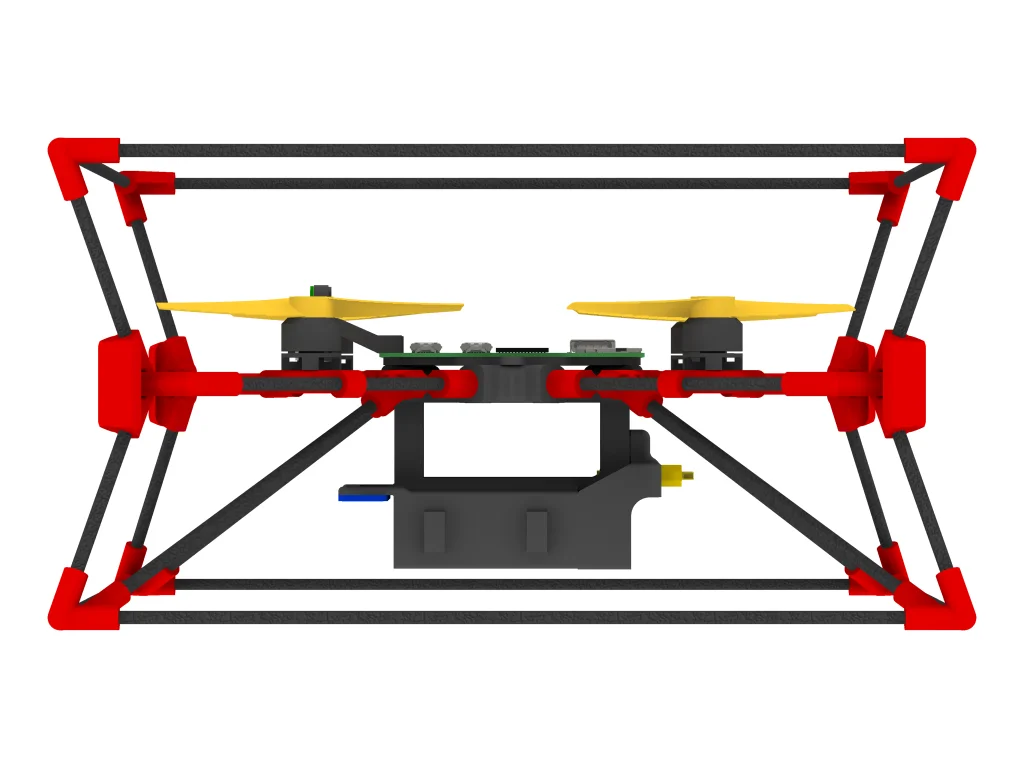
The frame ships in multiple design generations; the Latest folder contains the current canonical PLA + TPU parts. All red-colored parts in the renders are TPU 95A (flexible). The only part requiring print supports is Battery_holder_magnetic_lid.stl. Strut lengths: 8× 195mm (outer cage), 8× 97mm (arms), 4× 72mm (legs).
Attribution
Author: thecognifly (Ricardo de Azambuja et al.) GitHub: https://github.com/thecognifly/CogniFly-STL Project site: https://thecognifly.github.io/ License: See repository (research/academic project) Source repo: https://github.com/thecognifly/CogniFly-STL
🖨 Print Files (13)
Base.stl
BatteryHolder.stl
BatteryHolderSupport.stl
BatteryCap.stl
PiSupport.stl
Camera_Connector_L - Camera_Connector_L.stl
Camera_Connector_R - Camera_Connector_R.stl
Flex_CornerKnee_updated.stl
Flex_CornerMainSupport_updated.stl
Flex_Foot3_Shorter_Tough.stl
Flex_Foot4_Shorter.stl
Flex_Main_connector_new_bumper.stl
Required Hardware
| Item | Qty | Notes |
|---|---|---|
| Brushless Motor 1104 6000KV | 4 | Use with 3025 2-blade propeller (paper config) |
| Propellers 3025 2-blade | 4 | Polycarbonate recommended |
| 4-in-1 ESC 20×20mm 35A | 1 | Spedix IS35 35A used in paper |
| Flight Controller 20×20mm | 1 | Holybro Kakute F7 Mini V2 or Heli-Nation Talon F7 |
| Raspberry Pi Zero W | 1 | Single-board computer for autonomy |
| Raspberry Pi Camera V2 | 1 | For vision and image processing |
| Matek Optical Flow + Lidar sensor | 1 | 3901-L0X for position and altitude hold |
| LiPo Battery 650mAh 3S 75C | 1 | TATTU used in paper; 2S 2000mAh for v2 build |
| Carbon fiber rods 3mm diam. | 20 | 8× 195mm, 8× 97mm, 4× 72mm (or bamboo skewers) |
| TPU 95A filament | ~50g | For all flexible frame parts |
| PLA filament | ~100g | For rigid structural parts |
| XT30 connector + cable | 1 | Solder to ESC power input |
| M2 screws, nuts, rubber rings | assorted | For ESC/FC mounting (usually included with FC) |
| Cable zip ties ~2mm | assorted | For cable management |
| Raspberry Pi Zero Mini Camera Cable - 38mm | 1 | — |
| Micro SD card > 16Go | 1 | — |
Explore similar robots