Solo12 Quadruped
 B
B✓ Links verified Aug 31, 2026
Sign up to InstallAbout this program
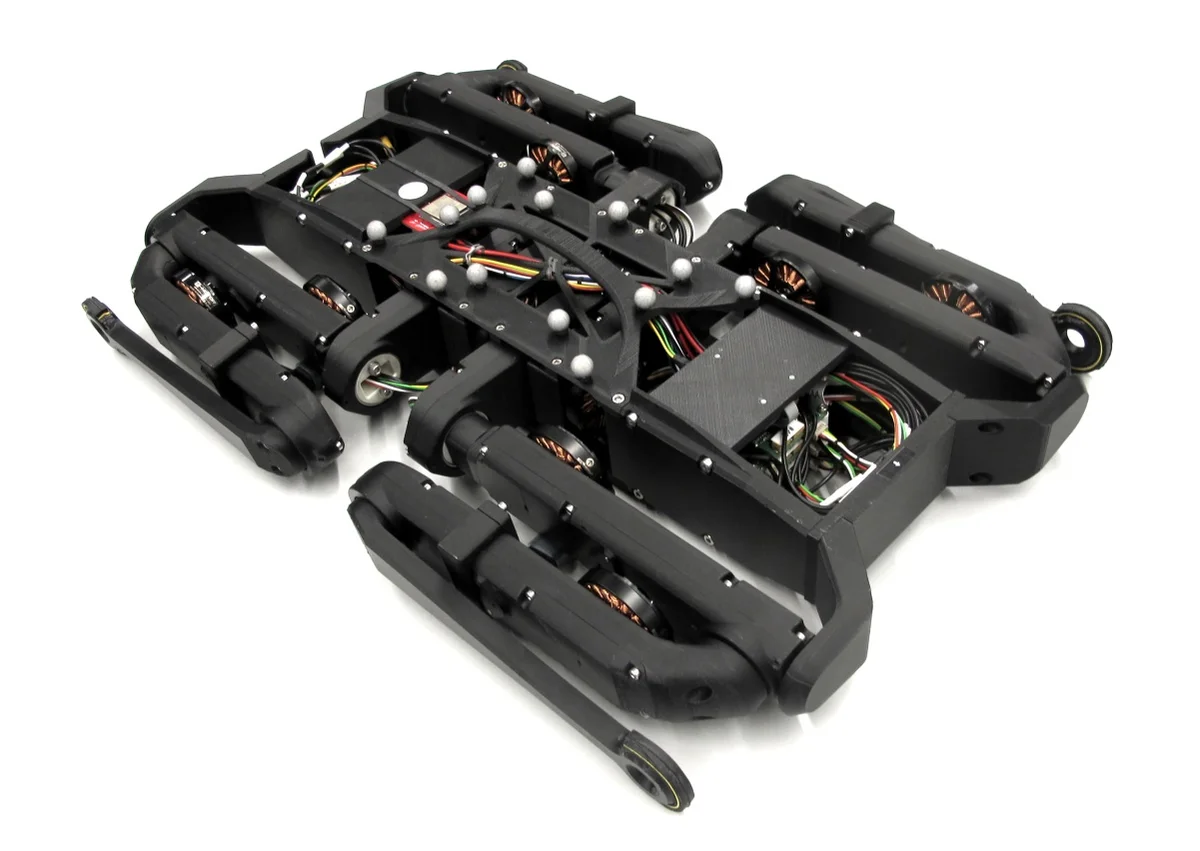
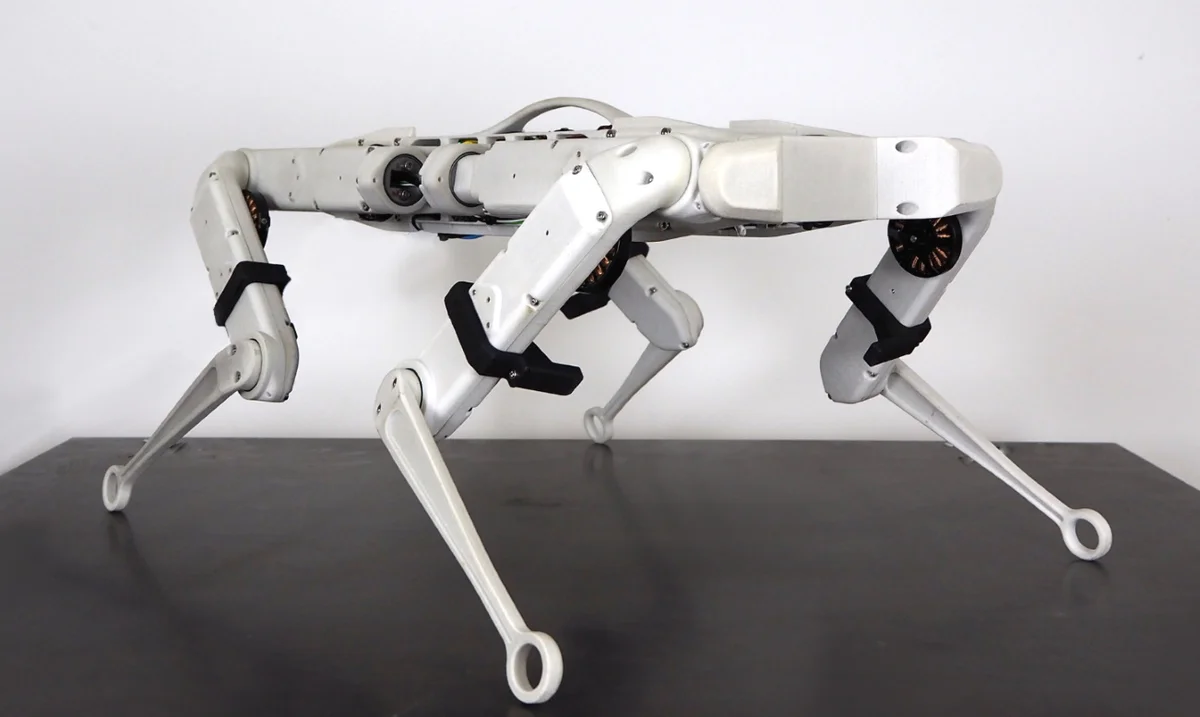
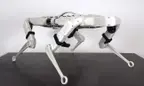
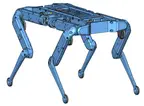
Solo12 is an open-source 12-DOF quadruped robot from the Open Dynamic Robot Initiative (ODRI), a collaboration between MIT, LAAS-CNRS, NYU, and MPI-IS to provide the legged-locomotion research community with an affordable, reproducible platform for dynamic control research.
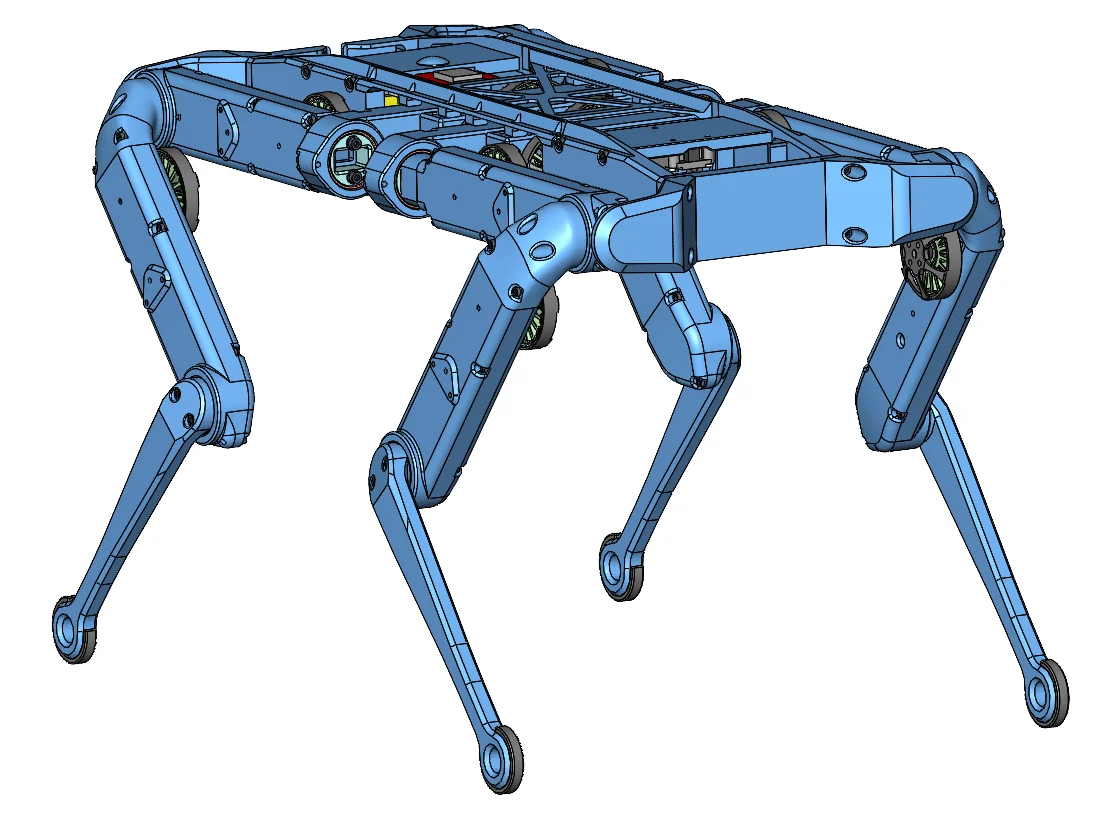
The robot has four legs, each with three degrees of freedom (hip abduction/adduction, hip flexion/extension, and knee), actuated by ODRI's open-source brushless direct-drive actuator modules. Direct-drive transmissions give the robot high-bandwidth torque control and transparent dynamics — critical for whole-body MPC, reinforcement learning, and contact-rich locomotion experiments that are difficult or impossible on geared quadrupeds.
Solo12 has been used in dozens of published locomotion papers studying bounding gaits, stair climbing, reactive balance control, sim-to-real reinforcement learning, and model-predictive control. The full hardware and software stack — actuator PCBs, mechanical CAD, master board firmware, real-time control interface, and Pinocchio-based dynamics — is published under BSD-3-Clause, making Solo12 one of the most accessible research-grade quadrupeds available.
This program provides cloud-side locomotion commands (stand, sit, directional walking, trot, emergency stop) that relay to the onboard controller over WebSocket. The hardware requirement is a Raspberry Pi 4 acting as the high-level controller; the real-time low-level control loop runs on the master board over EtherCAT/SPI to the 12 actuator modules.
Credit to the Open Dynamic Robot Initiative consortium (LAAS-CNRS, MPI-IS, NYU, MIT) — upstream repository at https://github.com/open-dynamic-robot-initiative/open_robot_actuator_hardware under BSD-3-Clause.
Build Guide
Step-by-step assembly instructions for the Solo12 quadruped: Solo12 hardware README
Printing
Solo12 is a research-grade direct-drive quadruped — most of the robot is custom electronics, machined aluminium, and ODRI actuator modules, so the 3D-printed set is intentionally small (this is the correct, complete print set, not a partial one). The 11 parts below are the Solo12-specific printable components, curated from the much larger ODRI open_robot_actuator_hardware repo (which contains 200+ STLs spanning tools, jigs, and other robot configurations). PLA/PETG, ~214 cm³ total.
Leg hip modules — print one per corner (4, all distinct):
- solo12_hip_fe_fl (front-left), solo12_hip_fe_fr (front-right), solo12_hip_fe_hl (hind-left), solo12_hip_fe_hr (hind-right)
- These are the hip flexion/extension housings; each corner is a separate handed part — print all four.
Body frame — print one each (5):
- body_structure_center, body_structure_side, body_structure_top_imu (top plate with IMU mount)
- hip_adapter (mounts the hip modules to the body)
- led_cover (status-LED cover for the NeoPixel ring)
Assembly stand (accessory — 2):
- stand_foot and stand_fork form a benchtop stand/cradle used to hold the robot during assembly and calibration. This is an accessory/jig, not part of the walking robot — print it if you want the stand, skip it otherwise.
Not printed: the 12 ODRI brushless direct-drive actuator modules, 6 micro-driver PCBs, master board, IMU, timing belts, bearings, and machined plates are all sourced/fabricated per the BOM — only the parts above are 3D-printed.
🖨 Print Files (11)
solo12_hip_fe_fl.stl
solo12_hip_fe_fr.stl
solo12_hip_fe_hl.stl
solo12_hip_fe_hr.stl
body_structure_center.STL
body_structure_side.STL
body_structure_top_imu.STL
hip_adapter.STL
led_cover.STL
stand_foot.STL
stand_fork.STL
Required Hardware
Solo12 Quadruped — Bill of Materials
Authoritative BOM from the Open Dynamic Robot Initiative (ODRI) upstream repository
open_robot_actuator_hardware
(BSD-3-Clause, © Max Planck Gesellschaft & New York University, 2019-2021).
This is a research-grade quadruped. Most parts are custom electronics, machined, or sourced from specialty European distributors (Mouser, DigiKey, Reiff, RS, SBN, Online Schrauben). There is no consolidated kit — you build the actuator modules, fabricate body plates, populate the Master Board / Micro Driver Board PCBs, and order the rest piecewise.
Configuration: Solo12 = 4 legs × 3 DOF, so 12 actuator modules, 6 micro-driver boards (each drives 2 motors), 1 master board, 1 IMU, plus body frame, batteries (v1.1 autonomy upgrade) and high-level controller (Raspberry Pi 4).
Upstream source pages used to compile this BOM:
Explore similar robots